
How a master key system is organized
Think of it as levels. Each door has its own change key. A group of doors, like one floor or one department, also opens with a sub-master. And one master opens everything. The owner holds the master, managers hold sub-masters, and staff hold only the change keys for their own office or unit.
Who uses them
- Landlords with several units: each tenant's key opens only their apartment, the landlord's key opens all of them, and a separate key opens the basement and utility rooms.
- Offices where staff need their own office and the shared spaces, but not the server room.
- Medical and dental practices that must restrict medication and records rooms.
- Schools, churches and nonprofits where volunteers and staff come and go.
Restricted keys
A master key system only stays secure if nobody can copy the keys. We use restricted keyways that hardware stores and kiosks can't duplicate. New copies come only through us, with your written authorization. Keys can be stamped with a number so you know whose key it is.
What we hand over
- A plan showing which key opens which door
- The keys, labeled and logged
- A key record you keep, so you always know who has what
Planning for change
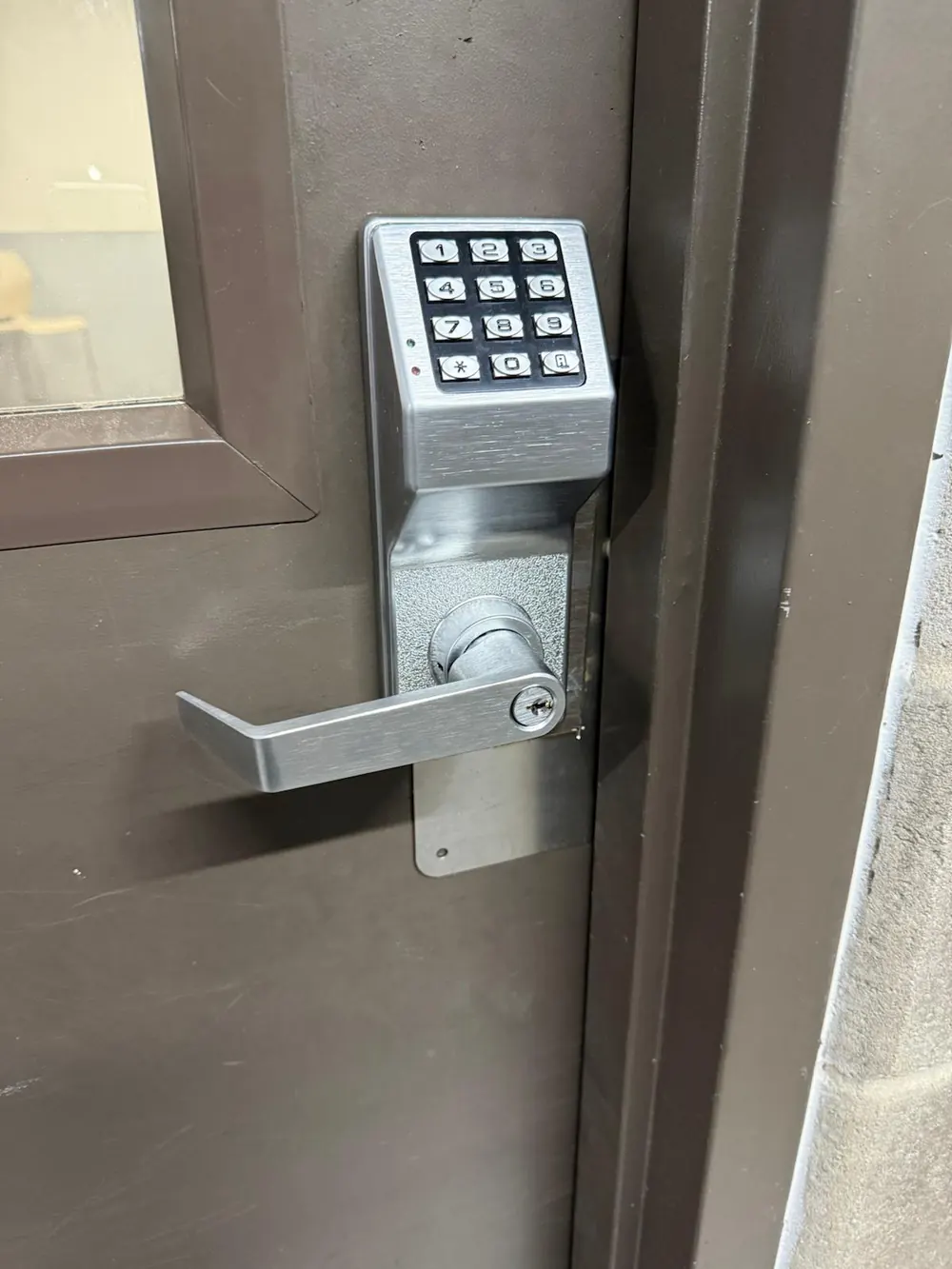
Good systems leave room to grow. When you add a unit, a door or a department, we can add keys that fit the existing system. If a master key ever goes missing, we'll walk you through the options, which may include rekeying part or all of the system. For businesses with frequent staff turnover, pairing keys with keypad or fob entry on the main doors keeps rekeying to a minimum.
We set up master key systems in Burlington, Lowell, Andover and across our service area.
Can my existing locks be used?
Often, yes. Many commercial cylinders can be repinned into a master system. We'll check what you have.
Is a master key system right for a small office?
For a handful of doors it's usually simple and worth it. We'll recommend the smallest setup that does the job.