
Three common setups
Standalone keypad lock
One door, codes set at the lock. Simple and affordable for a back door or a small office.
Networked locks
Several doors managed from an app or a computer, with a record of who came in and when.
Card or fob readers
Readers at the door and an electric strike or maglock. Each person gets a credential you can disable.
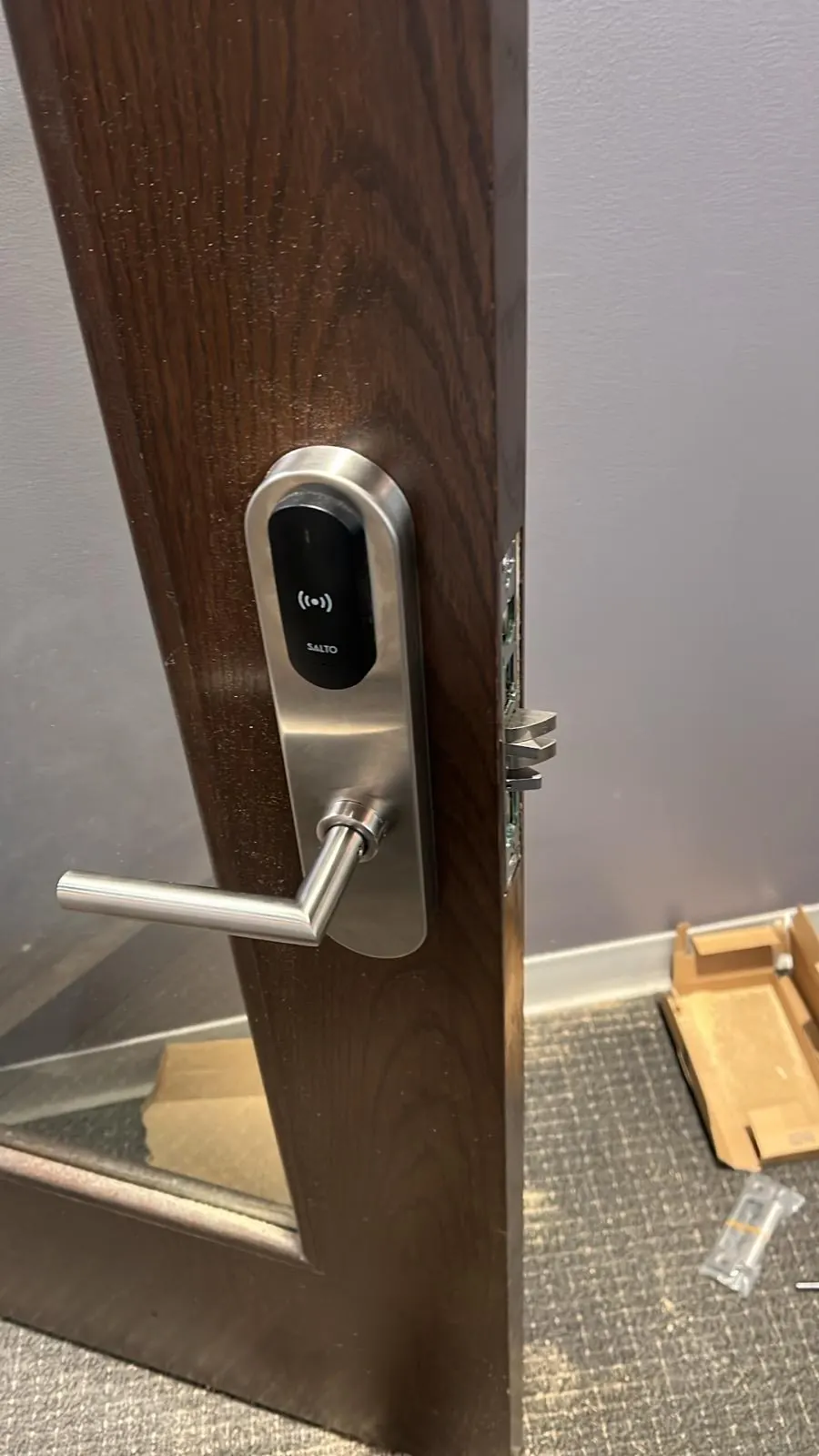
What it fixes
- An employee leaves and you don't have to rekey
- Cleaning crews and vendors get access only on certain days or hours
- You can see who opened the door if something goes missing
- No more lockouts because someone forgot their key
Things we plan around
Exits. People always need to be able to get out without a code, key or special knowledge. We make sure the egress side follows that.
Power and fail modes. For electric strikes and maglocks, we talk through what happens in a power outage and which doors should stay locked or unlock.
Fire code and the building. Some doors and buildings have specific requirements, and landlords may have their own rules. When in doubt, check with your local fire department or building inspector, and with the property owner if you rent.
Weather. Exterior keypads face snow, salt and freezing rain. We choose hardware rated for outdoor use.
Combining with keys
Most businesses still keep a key override for each door. We can make those keys part of a master key system with restricted keys, so the override doesn't become the weak point.
We install access control in Burlington, Tewksbury, Billerica and throughout our service area.
Can you add a keypad to our glass storefront door?
Usually, yes. Aluminum storefront doors take specific hardware. We'll look at the door and frame first.
Do you install for landlords?
Yes. Keypads on building entry doors are popular for multi-unit properties.